
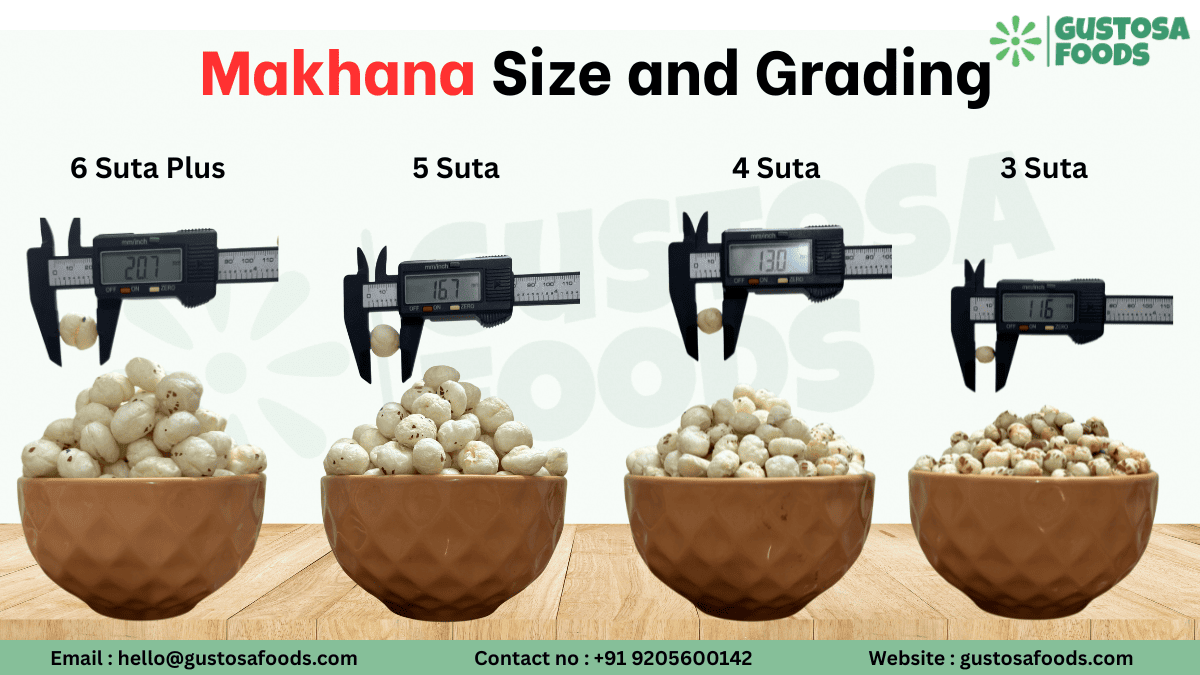
What Is Suta in Makhana? Size, Grading & Quality Explained for Beginners
Every day, we receive a large number of enquiries from new entrepreneurs who want to enter the makhana business. Most of them are eager to understand margins, sourcing, packaging, and branding.
But during these conversations, we notice one common gap again and again.
Many first-time entrants are unfamiliar with one of the most basic and important quality terms used in this industry — Suta (also written as Soota or Sutta).
We often hear this exact question:
“What is Suta in Makhana?”
If you are planning to start a makhana business and feel confused by words like 3 suta, 4 suta, 5 suta, this blog is written especially for you.
What You Will Learn in This Article
- What Suta in Makhana actually means
- How the makhana size is measured using Suta
- Difference between 3, 4, 5, 6, and 7 Suta makhana
- Which Suta grades are most commonly traded
- Why Suta matters for quality, pricing, and business decisions
What Is Suta in Makhana?
Suta is a traditional unit of length.
While it is rarely used in everyday measurements today, it plays a critical role in the makhana industry, especially for:
- Size grading
- Quality assessment
- Pricing and trade communication
In simple terms, Suta is used to measure the diameter of a makhana seed.
Understanding Suta Through Measurement Systems
In daily life, we usually follow modern measurement systems like:
MKS (SI – International System of Units)
- Meter (M) – Length
- Kilogram (Kg) – Weight
- Second (S) – Time
FPS System
- Foot (F) – Length
- Pound (P) – Weight
- Second (S) – Time
In the FPS system:
- 1 Foot = 12 Inches
- 1 Inch is divided into 8 equal parts
- Each part is called Suta (Soota)
Conversion You Must Remember
- 1 Inch = 25.4 mm
- 1 Inch = 8 Suta
- 1 Suta ≈ 3.175 mm
This is the base logic behind makhana grading.
Is Makhana Sorted Using Suta?
Yes.
Makhana is graded based on its diameter, and this diameter is traditionally measured in Suta.
Larger size = higher Suta = better visual appeal = higher price.
That’s why understanding Suta in Makhana is essential before you talk about quality or margins.
What Is 3 Suta Makhana?
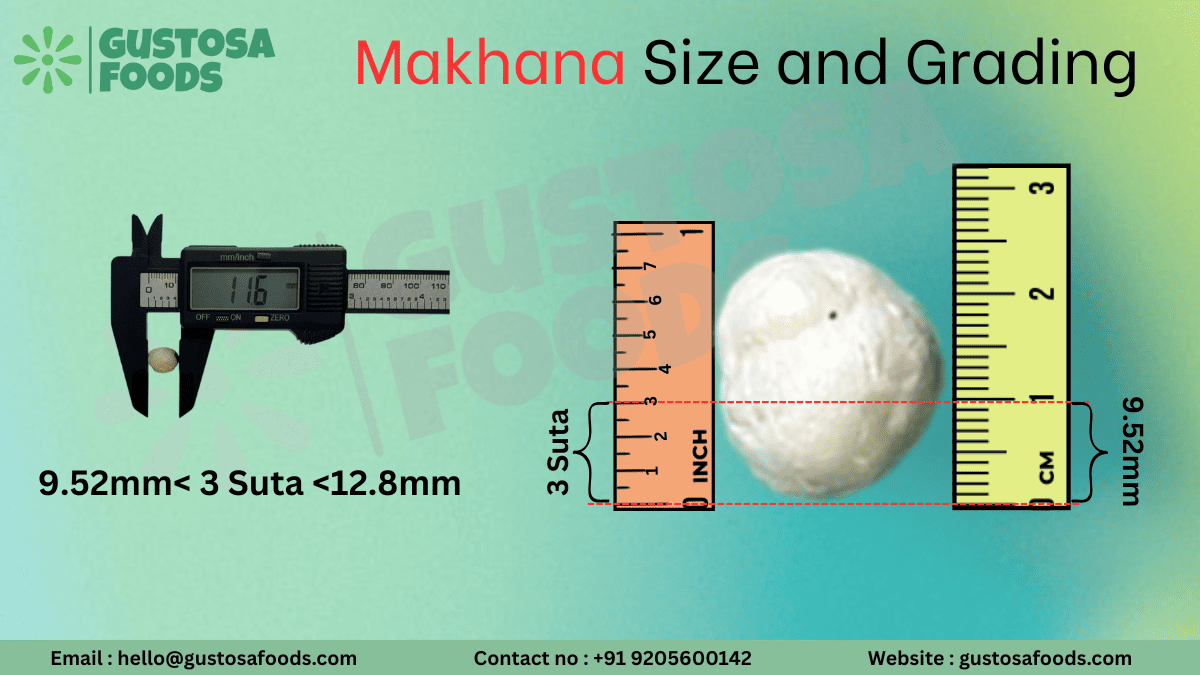
3 Suta makhana is considered a lower-grade size.
- Approximate size: 9.5 mm – 12.7 mm
- Common usage:
- Mixing grades
- Makhana flour
- Powdered or processed products
- Mixing grades
Size range:
9.5 mm < 3 Suta < 12.7 mm
This grade is rarely used for premium retail packaging.
What Is 4 Suta Makhana?
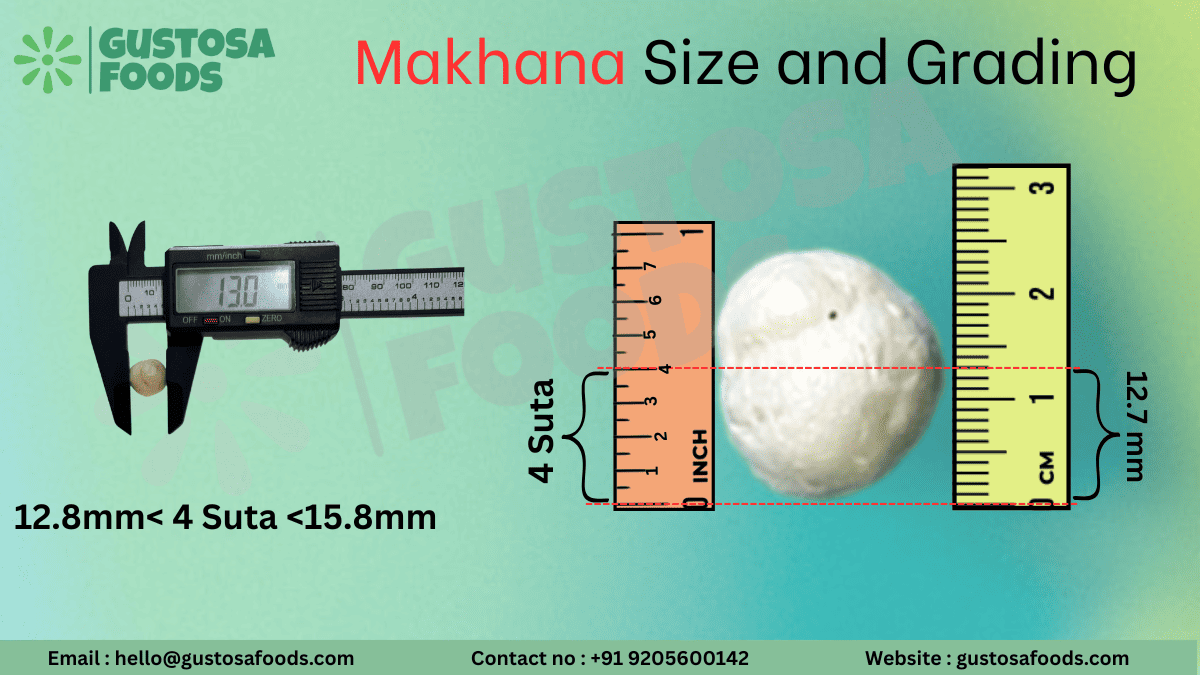
4 Suta makhana is one of the most popular and widely traded grades in the market.
- Approximate size: 12.7 mm – 15.8 mm
- Ideal balance of:
- Size
- Quality
- Price
- Size
Size range:
12.7 mm < 4 Suta < 15.8 mm
This is a common choice for everyday consumption and bulk trade.
What Is 5 Suta Makhana?
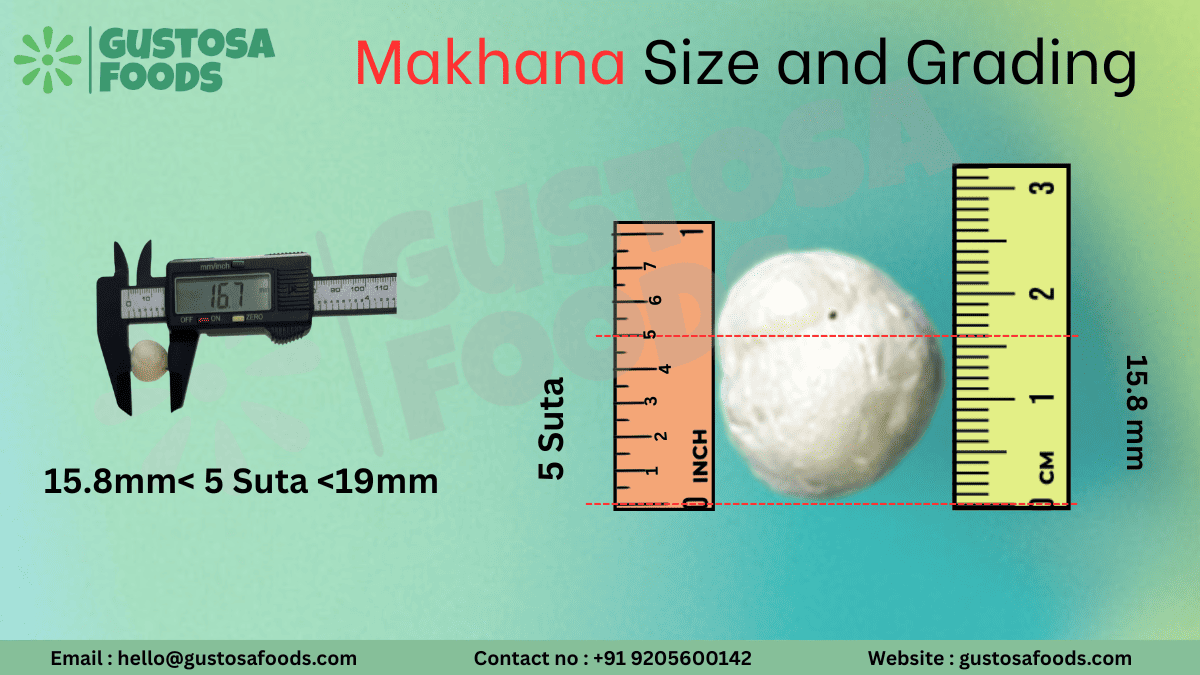
5 Suta makhana is considered a premium grade.
- Approximate size: 15.8 mm – 19 mm
- Known for:
- Larger size
- Better appearance
- Higher consumer appeal
- Larger size
Size range:
15.8 mm < 5 Suta < 19 mm
Most branded retail packs prefer this grade.
What Is 6 Suta Makhana?
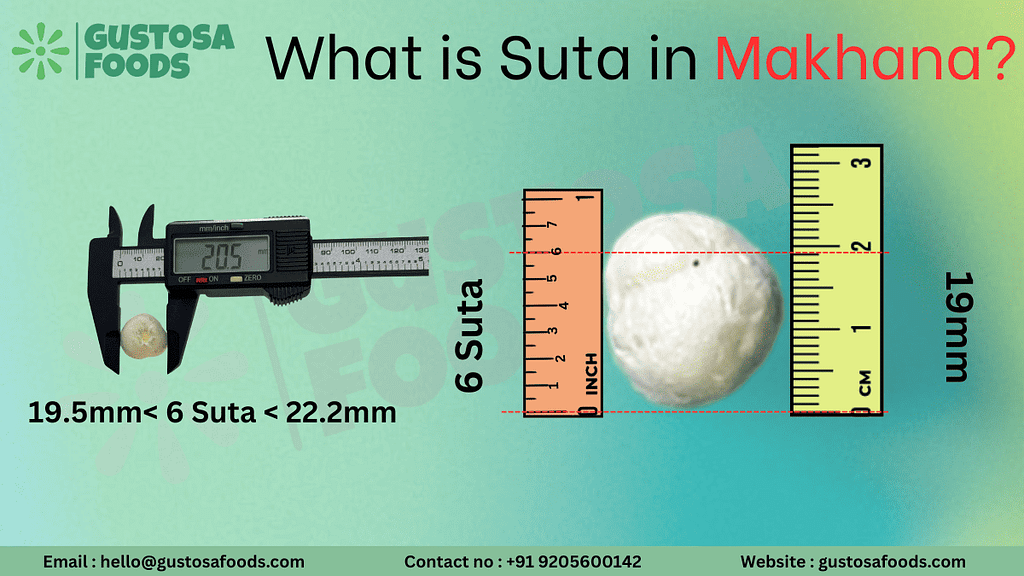
6 Suta makhana falls into the large-size, high-quality category.
- Approximate size: 19 mm – 22.2 mm
- Preferred for:
- Premium packaging
- Gift packs
- Export markets
- Premium packaging
Size range:
19 mm < 6 Suta < 22.2 mm
What Is 7 Suta Makhana?
7 Suta makhana is considered the most premium and rare category.
- Approximate size: 22.2 mm – 25.4 mm
- Used mainly for:
- Luxury products
- Niche premium buyers
- Luxury products
Size range:
22.2 mm < 7 Suta < 25.4 mm
Availability is limited, and prices are high.
Which Suta Grades Are Most Common in the Makhana Industry?
In practical trade, 4 Suta, 5 Suta, and 6 Suta are the most commonly used and demanded grades.
- 4 Suta → Mass market
- 5 Suta → Branded retail & premium
- 6 Suta → Export & luxury segment
Suta vs MM in Makhana Trading
- Domestic trade (India): Suta is commonly used
- International trade: Size is usually mentioned in millimeters (mm)
Both refer to the same measurement, just expressed differently.
Why Understanding Suta in Makhana Is Important
If you don’t understand Suta:
- You can’t judge quality properly
- You may overpay or underprice
- You may miscommunicate with traders
For anyone entering this business, Suta in Makhana is a basic but non-negotiable concept.
Final Words
Before thinking about margins, branding, or packaging, make sure you understand Suta in Makhana clearly.
It is the foundation of makhana quality, pricing, and trust in this trade.
Get daily makhana rate updates based on sutta size – click here.
For more information, contact hello@gustosafood.com and +91 9205600140
Frequently Asked Questions (FAQ)
1. What does Suta mean in makhana?
Suta is a traditional unit of length used to measure the diameter of makhana seeds for grading and pricing.
2. How much is 1 Suta in mm?
1 Suta is approximately 3.175 mm.
3. Which Suta makhana is best?
For most businesses, 5 Suta and 6 Suta makhana are considered the best due to size, appearance, and demand.
4. Is a bigger Suta always better?
Bigger Suta means larger size and better appearance, but the “best” grade depends on your target market and price point.
5. Is sutta grading standardized?
While traditional sutta grading is widely accepted across Indian makhana markets.
6. Why does makhana size matter?
Makhana size determines quality, pricing, export suitability, and consumer preference, making it a key factor in the sutta grading system.