
Where Makhana Is Sourced From in India | Regions & Hubs Guide
Makhana sourcing, or fox nuts, is an agricultural product tied to specific regions. Its sourcing relies on wetland ecosystems, traditional farming methods, and a clear-based trade system. For processors, brands, and procurement teams, knowing where makhana comes from, how makhana is sourced, and how it moves through the supply chain is essential. This knowledge helps maintain quality, ensure fair pricing, and guarantee a steady supply.
If you are starting a makhana business, this guide explains where makhana is sourced from in India, covering major production regions and procurement hubs.
Primary Regions Where Makhana Is Sourced From in India
Bihar—The principal source of raw makhana
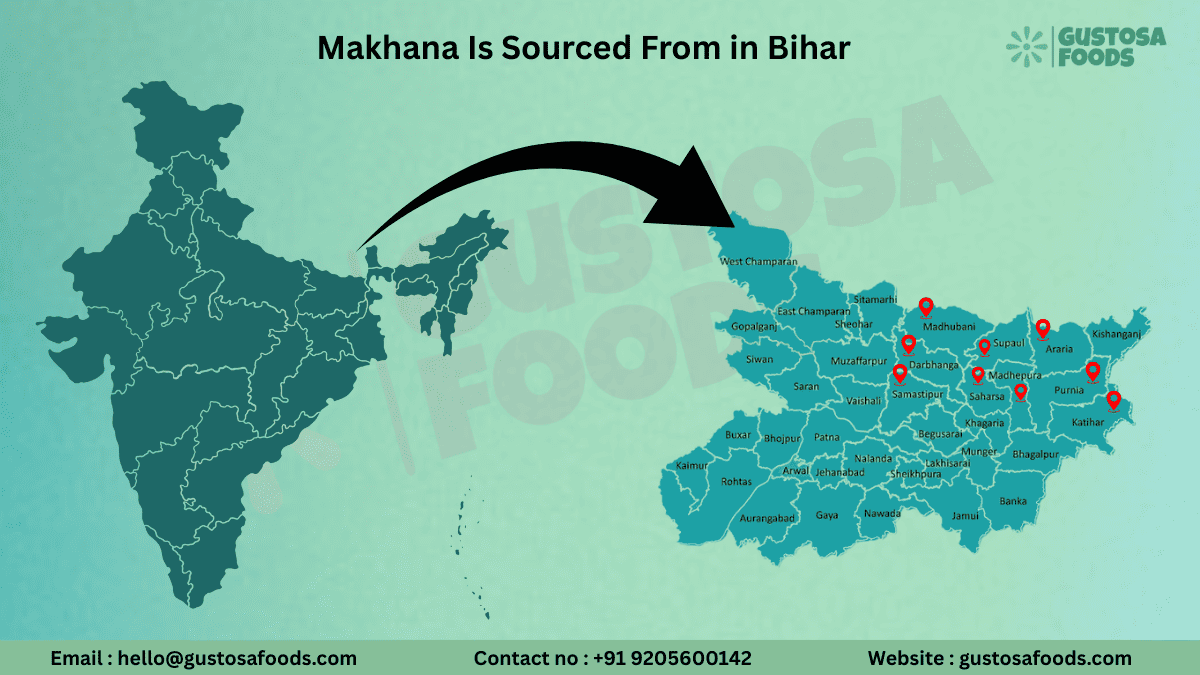
Bihar supplies the majority of India’s makhana, accounting for 85–90% of the country’s total production. Euryale ferox, the aquatic plant from which makhana is derived, can be grown in the state’s natural ponds, floodplains, and stagnant water bodies.
In Bihar, there are two main agro-trade zones where makhana farming is concentrated:
1. Mithilanchal Zone – Premium Makhana Belt
The Mithilanchal region is widely regarded as the origin and quality benchmark for makhana in India. Produce from this belt is known for larger kernel size, superior popping quality, and higher Suta grades.
However, makhana from this region typically has a slightly off-white to yellowish tone. The kernels are denser, resulting in a lower nut count per unit weight. In physical terms, Mithilanchal makhana has a higher bulk density compared to other regions.
Makhana Sourcing Districts—In Mithilanchal
- Darbhanga
- Madhubani
- Sitamarhi
- Samastipur
Darbhanga plays a dual role as both a major production center and one of the most influential trading hubs in the makhana supply chain.
Procurement Characteristics
Pros
- Larger nut size
- Strong overall appearance
- High popping quality
Cons
- Slight yellowish colour
- Lower nut count per gram
- Higher bulk density
2. Seemanchal Zone—Volume & Processing Belt
The Seemanchal region supports large-scale cultivation and bulk supply, making it vital for processing units and volume-driven markets. While the average kernel size is marginally smaller than that of Mithilanchal, this zone ensures supply continuity and competitive pricing.
Makhana Sourcing Districts—In Seemanchal
- Saharsa
- Supaul
- Araria
- Purnea
- Katihar
- Kishanganj
Procurement Characteristics
Pros
- Whiter kernel colour
- Higher nut count per gram
- Lower bulk density
Cons
- Slightly smaller nut size compared to Mithilanchal
West Bengal Belt – Emerging & Limited Production
Outside Bihar, makhana cultivation is limited and localized in parts of North Bengal. Production here is smaller in scale and largely unorganized.
Key Producing Areas
- Harishchandrapur
- Malda
- Dalkhola
This belt lacks independent grading or pricing hubs. As a result, most makhana produced in North Bengal is routed to Makhana Hubs, primarily Purnea and Darbhanga, for trade and commercialization.
Major Makhana Procurement Hubs
Purnea—The Central Hub of Makhana Sourcing and Procurement
Purnea, especially Harda Bazar, is the most important makhana trading hub in India. It serves as the primary point for:
- Bulk procurement
- Price discovery
- Multi-grade availability
- Wholesale and processor-level transactions
For anyone visiting Bihar to source makhana, Harda Bazar is a must-visit.
Procurement Flow: From Source to Buyer
The makhana supply chain generally follows this structure:
Farmer ponds → Phori → Processing & grading → Makhana Hubs → Wholesalers → Brands / processors
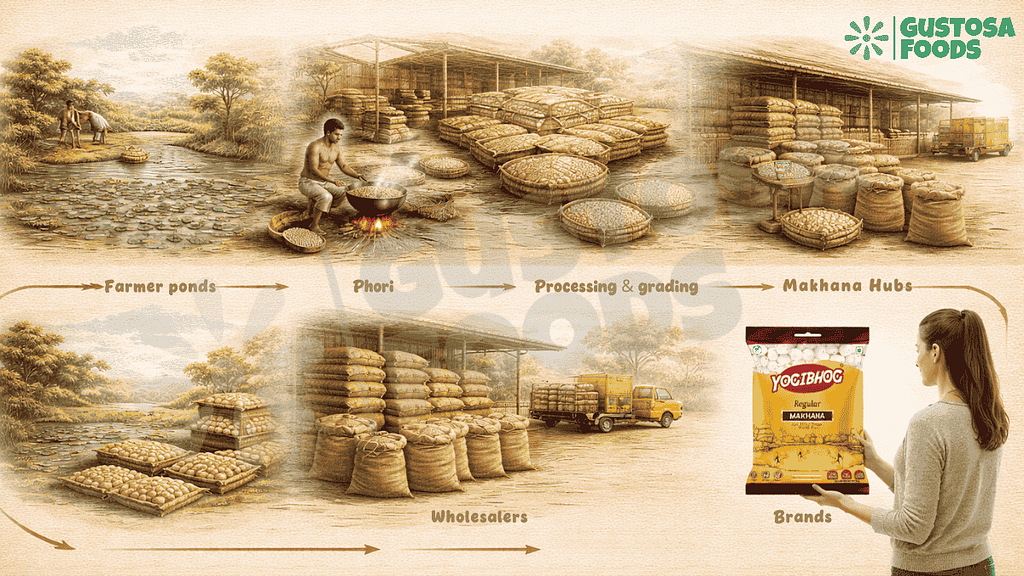
Understanding this flow enables procurement teams to:
- Verify the material’s true origin.
- Assess consistency in quality
- Negotiate makhana pricing
- Plan logistics and inventory more effectively
Makhana sourcing in India is highly concentrated, origin-specific, and driven by regional hubs. Bihar remains the backbone of the country’s raw makhana supply, supported by limited but growing production in North Bengal. Key procurement hubs such as Darbhanga and Purnea play a central role by facilitating quality assessment, price discovery, and large-scale bulk transactions.
For an effective makhana business, stakeholders must prioritize makhana sourcing based on regions, hubs, supplier credibility, and Suta grading, rather than focusing only on the point of sale.
Procurement-focused takeaway
Reliable makhana sourcing depends on understanding its origin regions and hubs, with Purnea and Darbhanga farming the core of India’s procurement ecosystem.
To learn how to identify a genuine Makahna supplier, read the article.
For More information, do follow us on our Instagram and contact +91 9205600142
Q1. What is the main source of makhana in India?
Bihar is the primary source, contributing nearly 85–90% of India’s total makhana production.
Q2. Which region produces the best quality makhana?
The Mithilanchal region of Bihar is known for premium quality makhana with larger size and higher suta grades.
Q3. Which region is best for bulk and processing-grade makhana?
The Seemanchal region is ideal for volume procurement due to higher nut count and lower bulk density.
Q4. What is the biggest makhana sourcing mandi in India?
Purnea, particularly Harda Bazar, is the largest and most active makhana procurement hub.
Q5. Is makhana grown outside Bihar?
Yes, limited cultivation exists in North Bengal, but most of that produce is traded through Makhana Hubs.
Q6. Why is mandi sourcing important in makhana trade?
Mandis ensures standardized grading, transparent pricing, bulk availability, and verified origin.